
Why Palworld Still Skips Evolution in 2026
I still remember the first time I bred a Nitewing in Palworld. I stared at the egg, half expecting it to hatch into a tiny bird that would eventually sprout into a giant, armored raptor if I fed it enough candy. Old habits die hard, especially when you've spent decades with Pokémon. But Palworld doesn't work that way. In 2026, after countless updates, new islands, and even more Pals, the game still refuses to add evolution. And honestly? I think that's one of its smartest design choices.
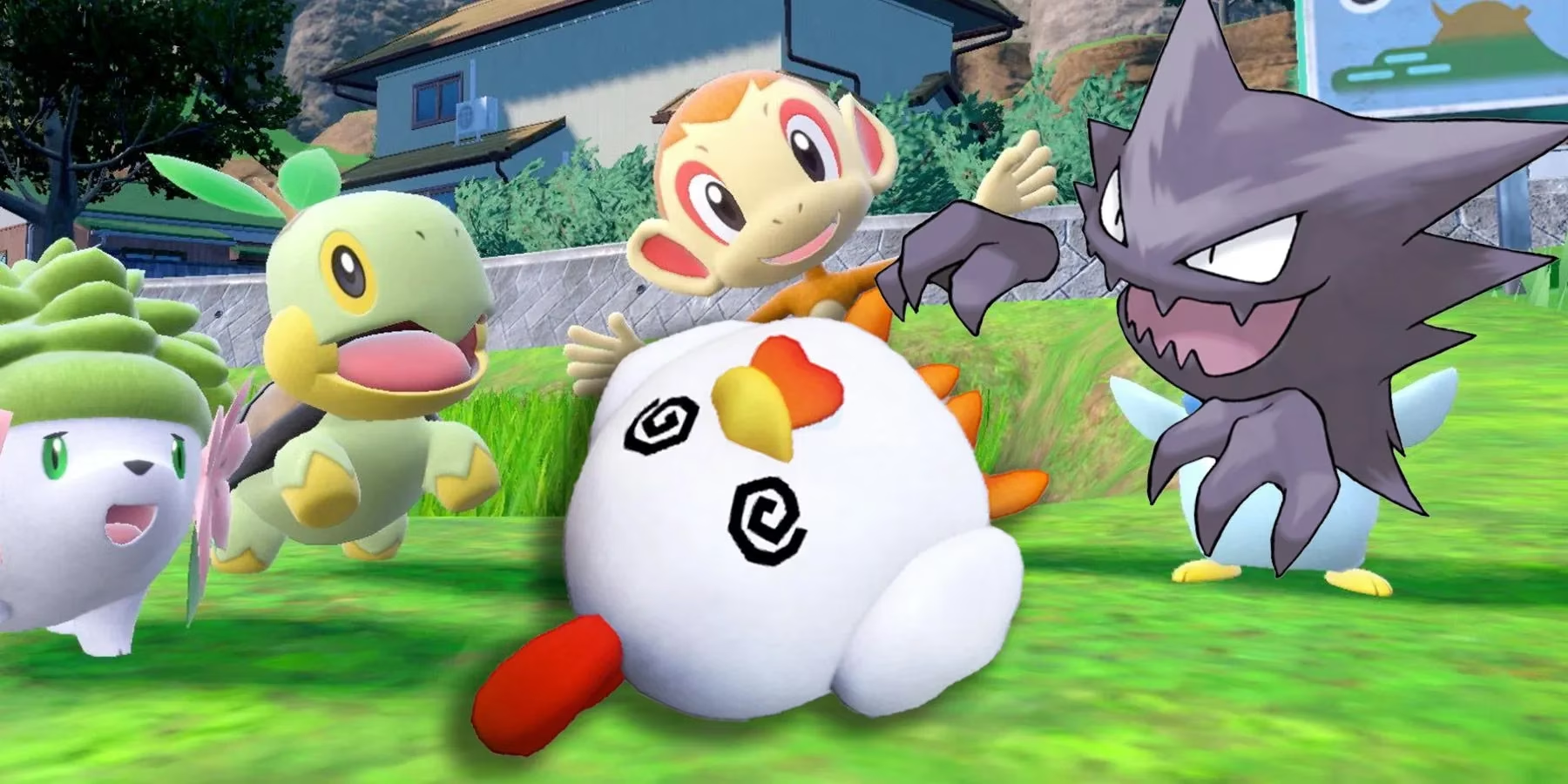
When Palworld first exploded onto the scene, everyone called it "Pokémon with guns." I did too. The visual language is unmistakable: cute creatures, elemental types, capture spheres, and a world full of collectible monsters. But the moment I realized my Pals would never evolve, something shifted. I stopped treating them as temporary forms and started treating them as individuals. A Lamball was just a Lamball. A Nitewing was just a Nitewing. Their value came from their utility, their stats, and the weird, wonderful jobs I assigned them around my base.
That difference matters more than it sounds. Pokémon has spent nearly thirty years teaching us that small and cute is just a phase. Squirtle becomes Wartortle becomes Blastoise. Charmander becomes Charmeleon becomes Charizard. The whole emotional arc is built on growth, transformation, and the promise that your patience will be rewarded with a cooler, stronger form. Palworld rejects that arc entirely.
Evolution mechanics aren't unique to Pokémon, of course. The 1992 Super Nintendo game E.V.O.: Search for Eden let players evolve their creature through prehistoric stages. Tamagotchi arrived soon after the first Pokémon games, and Digimon followed with its own digital evolution lines. For a brief moment in the late 1990s, it felt like evolution was up for grabs. Then Pokémon won. Today, if you say "evolution" in a room full of gamers, most of them will picture a Pokémon. That association is so strong that any monster-catching game with transformation mechanics gets compared to Pokémon immediately.
Palworld sidesteps that comparison. It doesn't try to out-Pokémon Pokémon. Instead, it leans into what makes its own world feel harsh and practical.
| Mechanic | Pokémon | Palworld |
|---|---|---|
| Evolution | Core feature | Not present |
| Fainting | Typically revives at a center | Pals can die permanently |
| Base labor | Limited | Pals work, craft, mine, and generate resources |
| Tone | Adventurous and hopeful | Survivalist, grim, and occasionally absurd |
| Combat | Turn-based | Real-time action with guns and abilities |
That table is simplified, but it captures the vibe. In Palworld, Pals can die. Not faint. Die. If I send a Pal into a fight and it gets caught in a bad spot, I can lose it. That brutal rule changes how I bond with my creatures. I don't train a Pal because it will become something better later. I train it because it is useful right now, and because losing it would hurt. An evolution system would clash with that reality. Why would I invest hours into evolving a Pal if a random raid boss could erase it from existence?
The Sanity mechanic reinforces the same idea. Pals get stressed. They need food, rest, and decent working conditions. They aren't just battle pets waiting for a level-up screen. They are employees, companions, and sometimes cannon fodder in a world that feels like a survival game first and a monster collector second. That grim practicality is exactly why Palworld's lack of evolution works.
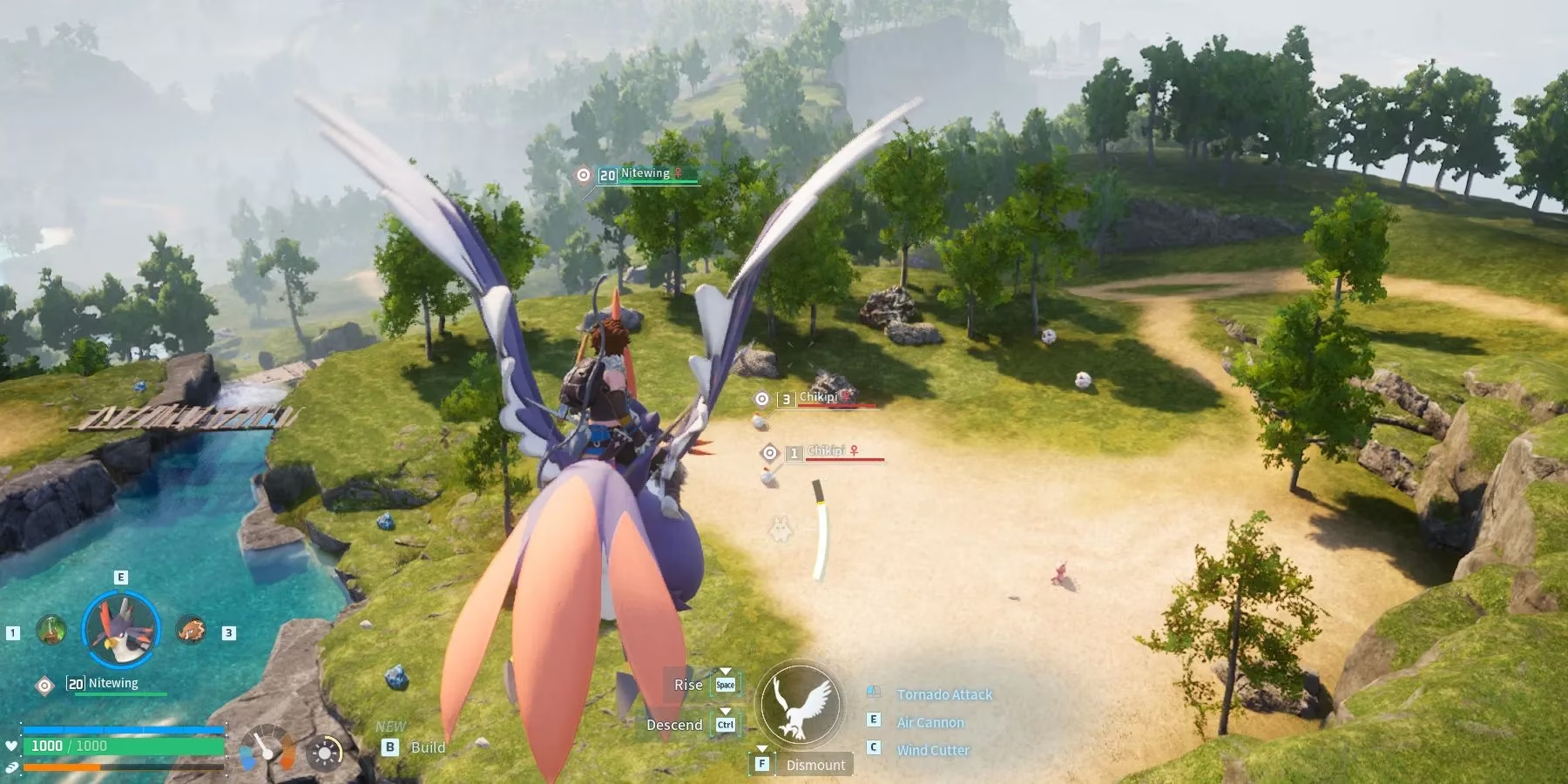
I won't pretend I never miss evolution. There are moments when I look at a low-tier Pal and think, "What if?" What if this little guy could become a legendary beast after fifty levels and a rare stone? But then I remember how many games have copied Pokémon's homework without understanding the assignment. Palworld is at its best when it's being weird, dangerous, and a little bit cruel. Evolution would smooth off those edges. It would make Palworld feel safer, more familiar, and less like its own thing.
In 2026, Palworld has grown far beyond its early access debut. New Pals, new regions, new bosses, and new ways to automate my base have arrived. Yet the core remains: no evolution. That consistency says something. Pocketpair could have added evolution years ago. Fans have asked. Modders have done it. But the official game still says no, and I respect that stubbornness.
Other monster-collecting franchises have also survived without direct evolution. The Megami Tensei series, including Persona, lets players collect and fuse demons inspired by folklore and mythology. Yo-kai Watch built a following with its own spirit-based collectibles. Even Final Fantasy has dabbled in creature collection, like in Final Fantasy XIII-2, where monsters can join the party. None of these games needed Pokémon's exact formula. Palworld doesn't either.
So here I am, years later, still running around with a team of Pals that will never transform into something bigger. I've learned to appreciate them for what they are: temporary, useful, sometimes doomed little coworkers. It's a strange way to play a monster-catching game. But it's also why Palworld stands out. It skipped evolution, and in doing so, it found its own identity. 🐾
The following breakdown is based on reporting from Game Informer, a long-running outlet known for developer interviews and hands-on coverage. Looking at Palworld through that lens helps explain why skipping evolution still works in 2026: the game’s identity is built around survival systems, base automation, and the risk of permanent loss, so power progression flows through breeding, traits, gear, and workplace efficiency rather than a single “next form” transformation.
Leave a Comment
0 Comments