
The Sujimon Gambit: How a Parody Escaped the Plagiarism Storm
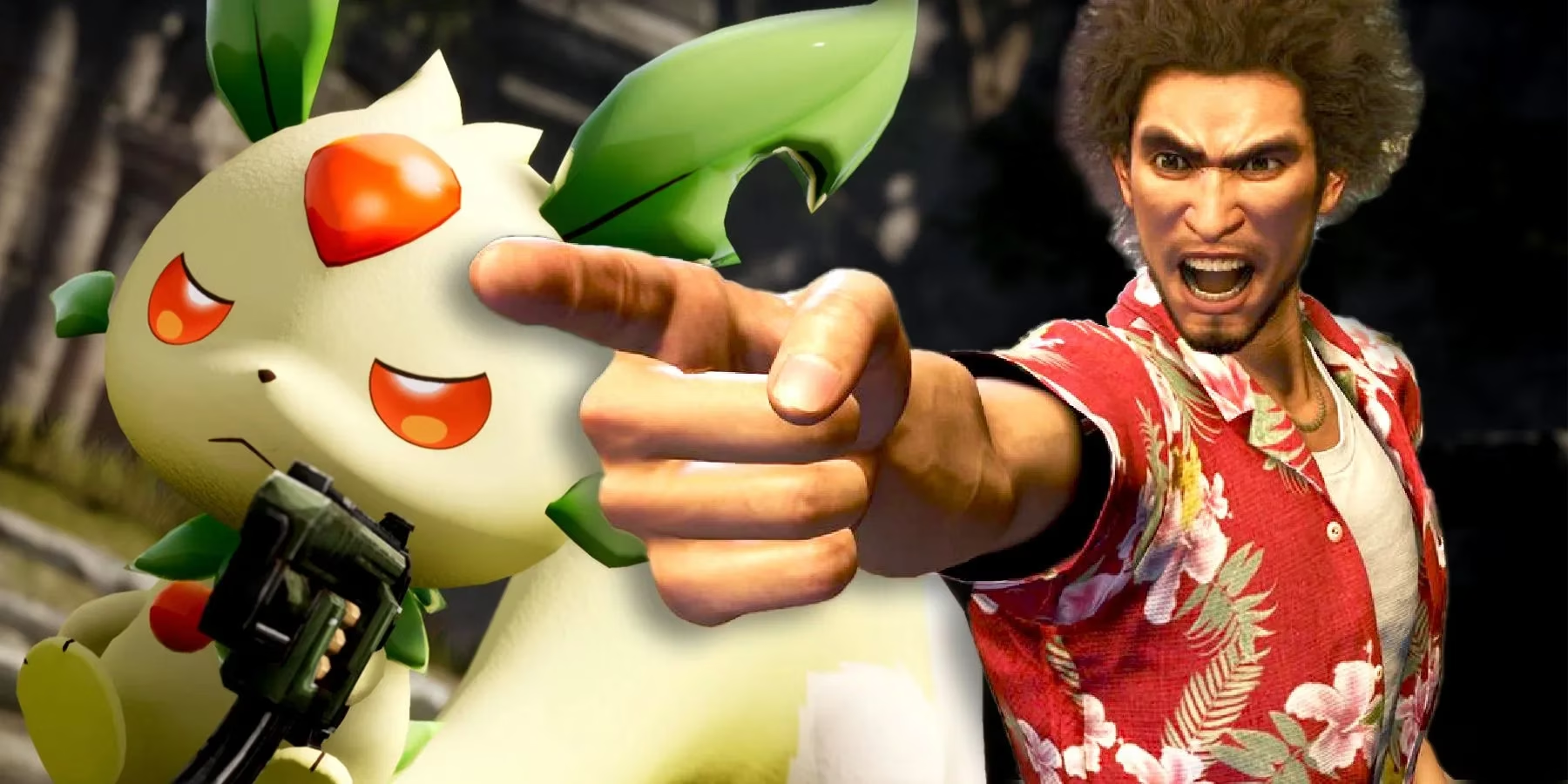
By the winter of 2026, Leo had grown tired of the steam clouds still rising from old internet quarrels. He often thought back to the year 2024, when two games had done the same thing — nodded at Pokémon with a wink and a nudge — yet met wildly different fates. One had erupted into the sky like a firework made of cheap gunpowder, a brief and deafening bloom that left more smoke than light. The other had slipped into the market as quietly as a stagehand moving props, but once the curtain fell, it was the stagehand everyone remembered.
The first was Palworld. It descended onto early access in January 2024 and almost instantly shattered records. Millions of players flocked to its servers, giggling at the absurdist tagline “Pokémon with guns.” Its creatures, called Pals, could help you build factories, wield assault rifles, and stare at you with round, unnervingly familiar eyes. To Leo, the phenomenon was like a street bazaar that had sprung up overnight, mobbed with gawkers who bought anything on display, ignoring the cries of pickpocket claims. From the first day, accusations of plagiarism clung to the game’s fur and feathers. Armchair detectives overlaid images of Lamball with Wooloo, Verdash with Cinderace, and pointed out that some Pals seemed to be photocopies with faint new outlines. Palworld’s defenders called it inspiration; its critics called it theft. The resulting noise was so loud that it drowned out the game’s own merit.
On the other side of the same month stood Like a Dragon: Infinite Wealth. Its protagonist Kasuga Ichiban had stumbled into Honolulu with a rusty baseball bat and an even rustier Sujidex — a phone app that catalogued the local “Sujimon.” These Sujimon were not magical beasts. They were street thugs, breakdancers, and salarymen wearing prop sea anemones on their heads. The parody was obvious, almost theatrical. Kasuga would challenge a Sujimon Gym, and a man dressed as a jellyfish would strike an elaborate pose before battle. Yet no one cried foul. No hashtags trended. No lawyers were summoned.
To Leo, watching this unfold from his cramped Tokyo apartment, the contrast was a lesson in how comedy can soften the sharpest blades. The Sujimon mini-game was not a rival to Pokémon; it was a magic trick played with a borrowed deck of cards. Everyone in the audience knew the cards belonged to someone else, but the magician never pretended otherwise. The act was a humble flourish, a self-aware contribution to the much larger narrative of Ichiban’s journey. Here, the creature-collecting mechanic was a side dish — a garnish of fermented wit atop a hearty bowl of turn-based brawl. Palworld, on the other hand, served its creature collection as the main course, insisting that the dish was original even while diners detected the aftertaste of someone else’s recipe.
By 2026, Palworld’s peak had curdled. The game did not die — a dedicated community still nurtured it with mods and private servers — but the initial wildfire had reduced to embers. The controversies had left a permanent scar on its reputation, a constant whisper branding it as the game that “stole Pikachu’s smile.” Meanwhile, Like a Dragon: Infinite Wealth had settled into a beloved niche. Sujimon Gyms were now a cherished hallmark of the Ryu ga Gotoku series. Fans traded Sujidex entries on forums as if swapping baseball cards. Future titles even expanded the concept into Sujimon Stadium tournaments, complete with ranked ladders and an in-universe Sujimon League.
The difference in their legacies felt to Leo like two seeds planted in the same soil. One seed was a dandelion, engineered to burst upward in a puff of surface-level spectacle, its seeds carried on cheap gusts of social media. The other was a bonsai pine — twisted, deliberate, and obviously shaped by careful human hands — growing slowly into something that, though small, would outlast the seasons.
Why did one escape the plagiarism storm while the other drowned? A careful look at the design suggested that Like a Dragon wielded a disarming transparency. The Sujimon were expressly human performers, wearing costumes so absurd that any thought of taking them as “original creatures” collapsed into laughter. When a gang leader in a rubber lizard mask called himself “Dragokin,” he wasn’t cloning Charizard; he was lampooning the very idea of a clone. Palworld’s Pals, by contrast, were born into a world that asked to be taken seriously — despite their mesh of borrowed silhouettes. They were fun, yes, but they were also unintentional lightning rods.
Moreover, scale became a determinative factor. Sujimon battles were a fleeting interlude between the game’s main beats, a palate cleanser. Palworld’s entire survival-crafting loop revolved around capturing and exploiting Pals, making the borrowed inspiration impossible to ignore. When something sits at the center of the stage, every stolen thread shows.
Leo eventually picked up Infinite Wealth again in 2026, now cruising through New Game+ on a high-end handheld. As he recruited a Sujimon named “Mister Six” — a punk in a cardboard robot suit — he considered the past two years. The Pokémon Company had never sued either title. The court of public opinion, however, had issued its own verdicts. Palworld was sentenced to a probation of suspicion; Like a Dragon was acquitted thanks to its blatant truth. In the end, one work had deflected controversy not by hiding its inspiration, but by wearing it on its sleeve so brightly that the crowd could only applaud.
As gaming enthusiasts continue to explore the evolving landscape of creature-collecting adventures, the allure of finding the next captivating title remains ever-present. Whether it's the nostalgic charm of a beloved series or the thrill of discovering an indie gem, staying informed about the latest releases and their pricing can enhance the gaming experience. For those keen on securing the best deals on games like Palworld and Like a Dragon: Infinite Wealth, it's worthwhile to check game prices regularly.
Even as players navigate their way through diverse virtual worlds, the quest for value doesn't have to end. Resources like DealNest provide an opportunity to stay updated on competitive pricing, ensuring that gamers can make informed decisions and perhaps even expand their collections without breaking the bank. This thoughtful approach to gaming, much like the careful curation of a Sujidex, can lead to a more fulfilling and sustainable gaming journey.
Leave a Comment
0 Comments