
Palworld's Unresolved Controversy: Japanese Agencies Still Warn Talent in 2026
It’s 2026, and the name Palworld still sparks a quiet tension in certain corners of the Japanese entertainment industry. For most gamers around the world, the multiplayer monster-collecting survival game has long since proven it’s more than just a fleeting meme. It’s evolved, expanded, and maintained a loyal player base across Steam and Xbox. Yet behind the scenes, some of Japan’s biggest talent agencies continue to advise their artists to steer clear of even mentioning the game. Why does a title that brought millions of players joy remain a taboo for public figures in its home country? The answer weaves together a delicate tapestry of corporate diplomacy, intellectual property sensitivity, and a massive entertainment franchise that needs no introduction: Pokémon.
The Overnight Success That Shook the Industry
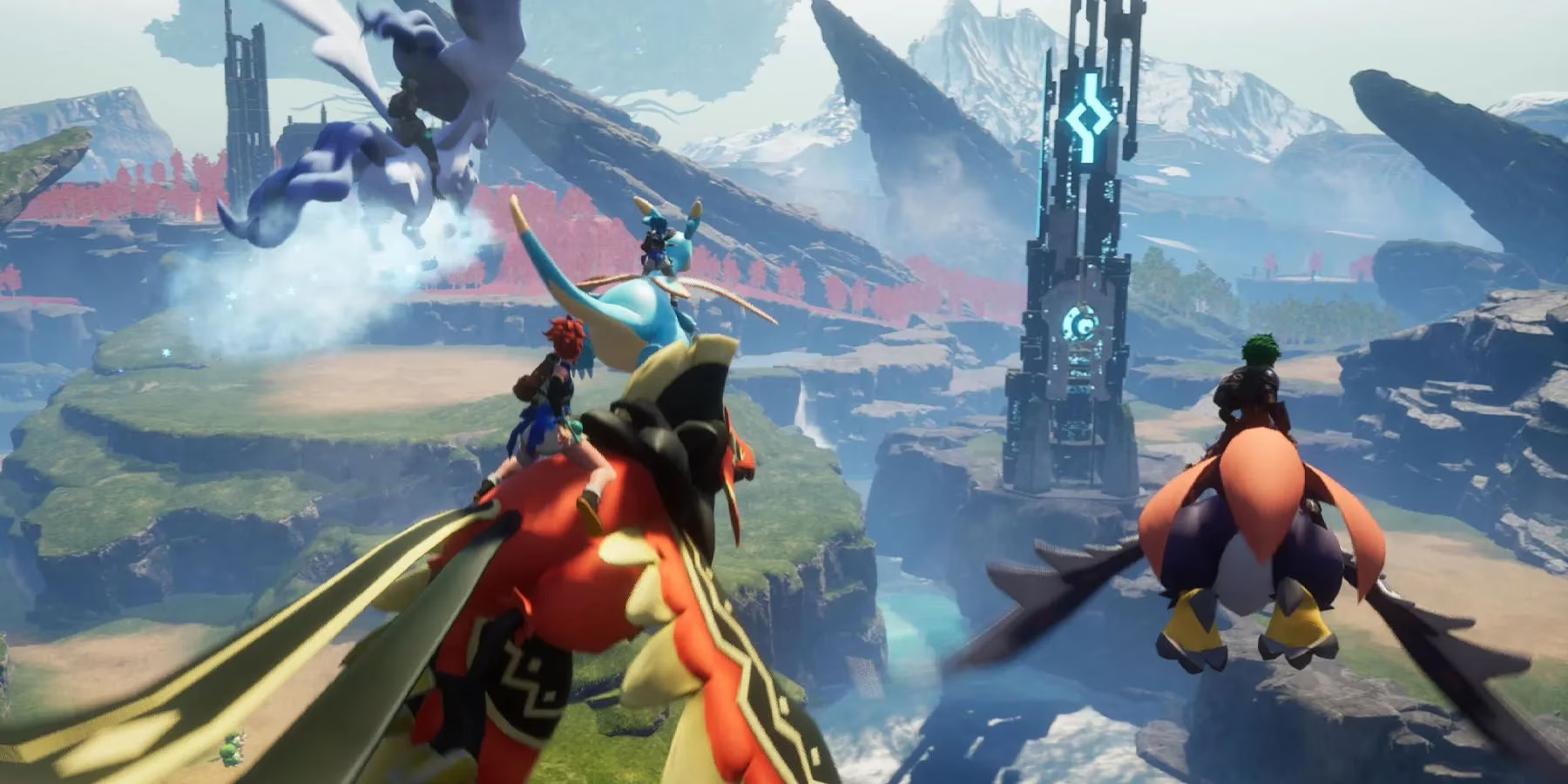
Cast your mind back to January 2024. Palworld erupted onto early access with a bang that few could have predicted. Developed by Pocketpair, this bizarre yet addictive blend of creature-catching, base-building, and weapon-wielding action launched simultaneously on Steam and Xbox consoles. Within days, it had sold millions of copies, shattering records and even outpacing the latest mainline Pokémon release, Scarlet and Violet, in terms of raw sales velocity. Social media feeds overflowed with clips of adorable Pals toiling in factories or wielding assault rifles… sometimes both at once. The game’s viral nature was unprecedented. It wasn’t just the gameplay that hooked players; it was the sheer audacity of the concept that kept everyone talking.
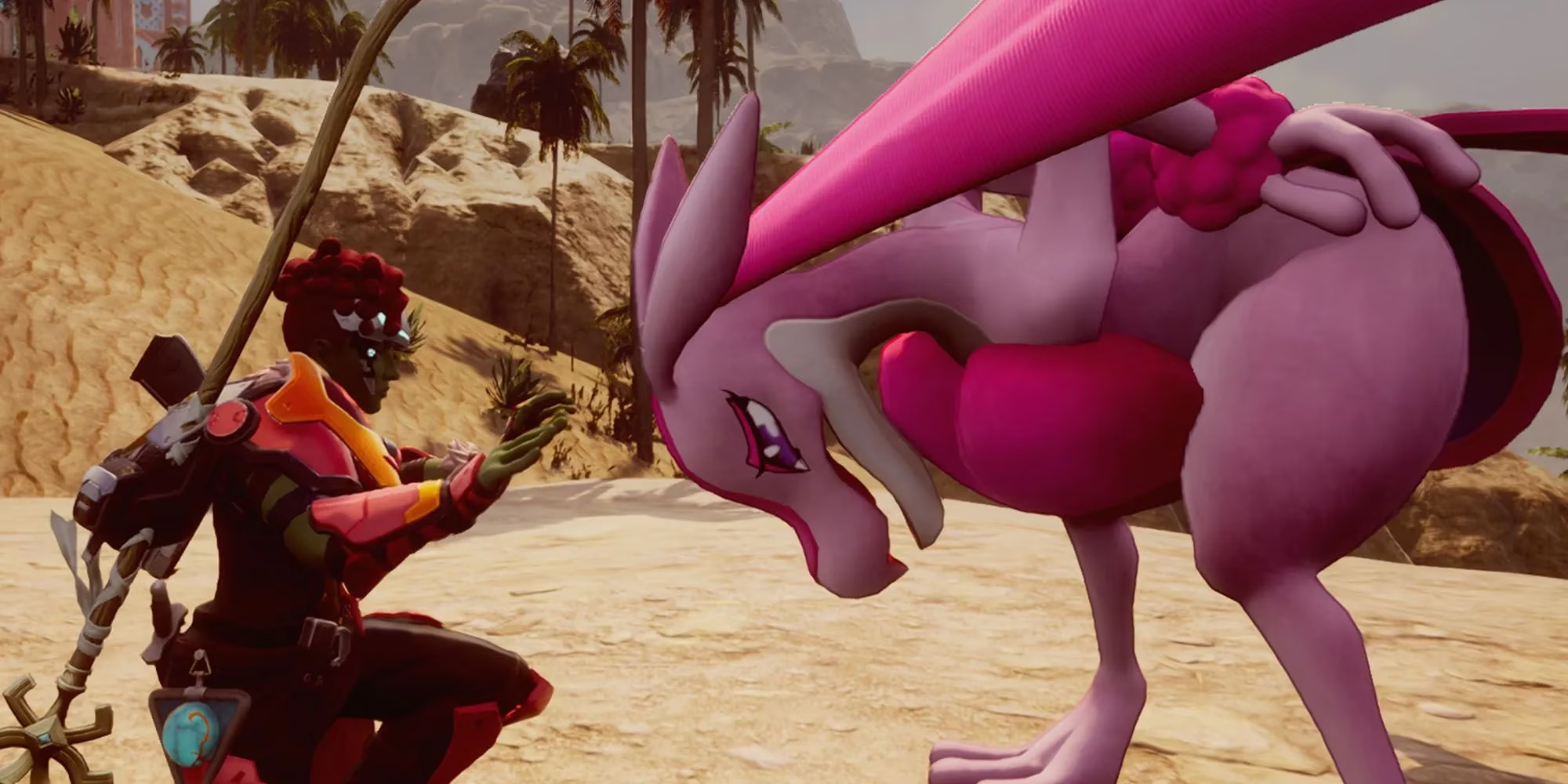
Almost immediately, though, the conversation took a more critical turn. Players began meticulously comparing Palworld’s creature designs to those from the Pokémon universe. The debates were fierce—was this inspiration, homage, or something far more legally risky? One of the most cited examples was Anubis, a tall, jackal-like Pal whose stance and design bore an unmistakable resemblance to Lucario, a beloved Fighting/Steel-type Pokémon. Screenshots placed side by side flooded forums and Twitter threads, fueling accusations of plagiarism that spread just as quickly as the game itself.
A Familiar Look Sparks Plagiarism Accusations
The comparisons went far beyond Anubis. Fans identified dozens of Pals whose silhouettes, color palettes, or elemental themes seemed to echo specific Pokémon. For every defender who argued that all monster-collecting games share basic archetypes, there was a critic pointing out that Palworld appeared to stretch the boundaries of coincidence. The developer, Pocketpair, and its CEO Takuro Mizobe, had previously stated that they took care to avoid copyright infringement and that the game had passed legal reviews. Yet the public conversation rarely settled on such reassurances. For many, the sheer volume of similarities made the case hard to dismiss—even if no official court ruling had been made.
This storm didn’t simply blow over. It entrenched itself in gaming culture, with Palworld becoming synonymous with the debate over where creative borrowing crosses the line into intellectual property theft. And in Japan, a nation renowned for its rigorous copyright enforcement and deep reverence for original creations, the matter was taken particularly seriously.
The Pokemon Company Takes Notice
Just days after Palworld’s early access launch, The Pokémon Company released a carefully worded statement that, while never mentioning the game by name, left no doubt about its target. Referring to “another company’s game released in January 2024,” the statement clarified that no permission had been granted for the use of Pokémon intellectual property or assets. More importantly, it announced an intention to investigate any potential copyright infringement and to take appropriate measures. Nintendo, a co-owner of The Pokémon Company, also acknowledged awareness of the situation but declined to comment on “individual cases,” maintaining its characteristic silence on legal matters unless absolutely necessary.
This sent a clear signal: the industry giant was watching. Even though no lawsuit followed immediately, the very act of issuing a public statement signaled that the relationship between the two companies was, at minimum, diplomatically frosty. For businesses that rely on collaborative partnerships with The Pokémon Company—from merchandise manufacturers to TV networks and talent agencies—the message was received loud and clear.
Japan's Talent Agencies React
This is where the story takes a uniquely Japanese turn. In a statement provided to Tokyo Sports, an unnamed Japanese talent agency revealed that it had instructed its performers and influencers not to mention Palworld in any capacity, whether on social media or in public appearances. The reasoning was purely pragmatic: “We have told our talent not to mention Palworld on social media or in public,” a source from the agency explained. “This was done out of consideration for the Pokémon side as an agency. This decision was made in consideration of future collaborations, etc.”
In Japan’s tightly interconnected entertainment ecosystem, where voice actors, singers, and TV personalities frequently participate in Pokémon-related projects—movies, anime, commercials, game promotions—a single misstep could jeopardize lucrative, long-standing relationships. The agency made it clear that no official threat had been made; it was purely a preventative measure. But the implication was powerful: associating oneself with a product that The Pokémon Company might view as infringing could be seen as a betrayal of trust, no matter how indirect.
Other agencies are rumored to have followed suit, though few have spoken publicly. The result is a strange silence. While Palworld is discussed openly on Japanese gaming forums and YouTube channels, you’re far less likely to hear a major celebrity gush about their favorite Pal during a variety show interview. The caution persists, even as the game continues to thrive.
Xbox's Embrace and Continued Success
While parts of the Japanese entertainment world kept their distance, a very different story was unfolding on the global stage. Microsoft, seeing the game’惊天动地的流行, moved quickly to embrace Palworld as a key partner. Xbox confirmed that the title was the biggest third-party launch in the history of the Game Pass service, amassing over 7 million Xbox players within its first month. The platform holder didn’t just celebrate the numbers; it pledged tangible support. Dedicated servers were rolled out to ease the burden on the game’s infrastructure, and Xbox engineering teams worked alongside Pocketpair to optimize performance, ensuring that the multiplayer experience stayed stable amid the influx of survivors eager to explore the Palpagos Islands.
This industrial-level backing allowed Palworld to evolve from a rough early access curiosity into a polished, content-rich live service. By 2026, the game boasts a massive map, seasonal events, cross-play functionality, and creature rosters that have been further enriched (and noticeably distinct from certain competitors). For the millions who play it, the controversy is ancient history—or at most, a footnote. The actual gameplay loop, which combines survival mechanics, factory automation, and action combat in a way Pokémon’s turn-based battles never have, continues to draw in new fans.
A Two-Year Standoff
So, why does the agency warning still hold weight in 2026? Because the core dynamic hasn’t changed. The Pokémon Company’s investigation concluded long ago—officially, nothing was found to be legally actionable, or at least no public lawsuit ever materialized—but the shadow of doubt remains. In Japan’s corporate culture, the appearance of respect is often as important as legal fact. Talent agencies aren’t waiting for a courtroom showdown; they’re protecting their bread and butter by keeping any possible point of friction off the table.
Meanwhile, Pocketpair’s relationship with Pokémon’s stewards stays in a delicate limbo. The game’s community has largely moved on from the plagiarism debates, instead focusing on raid bosses, Pal breeding optimization, and the endless quest for shiny Lucky Pals. Yet every time a new Pal design is unveiled, a small contingent of fans revives the old comparisons, ensuring the topic never fully dies.
📊 Key Players in the Palworld Saga: A Quick Look
| Entity | Stance / Action |
|---|---|
| Pocketpair (Developer) | Maintains designs were original and legally vetted; enjoys Xbox support |
| The Pokémon Company | Issued statement of investigation; no formal lawsuit, but tension persists |
| Nintendo | Acknowledged awareness; refused to comment on individual cases |
| Japanese Talent Agencies | Proactively warned talent not to mention Palworld to safeguard Pokémon ties |
| Xbox / Microsoft | Aggressively supported the title; provided servers and technical aid |
😮 What started as a quirky survival game quickly became a fascinating case study in how modern entertainment handles the blurry line between inspiration and imitation. For players, Palworld is just a fun place to arm a fluffy sheep with a rocket launcher. For the industry that surrounds Pokémon, it’s a reminder that some topics are best left untouched—no matter how many millions of people are playing.
As we move deeper into 2026, the cautionary stance taken by Japanese talent agencies remains a curious artifact of this clash. It’s a silent acknowledgment that in the world of IP, perception can carry as much weight as proof. And until the day a legendary Japanese comedian casually shouts “I caught a Jormuntide!” on primetime TV without consequence, you’ll know the unspoken rule still stands firm.
Leave a Comment
0 Comments