
How a Clever Palworld Player’s Suggestion Transformed Base Storage Forever
Back in 2024, Palworld burst onto the scene like a rampaging Mammorest, blending survival mechanics with creature collecting in a way that felt both familiar and wildly fresh. Millions of players dove into the Palpagos Islands, eager to build sprawling bases and put their Pals to work. But as any veteran will tell you, the honeymoon phase quickly ran into a wall—literally. Base storage became the bane of every architect's existence, with chests multiplying faster than Lamballs in a breeding pen. Today, in 2026, those chaotic days are a distant memory thanks to a community-driven fix that changed everything. Let's take a look at how a simple Reddit post snowballed into one of the game’s most celebrated quality-of-life features.
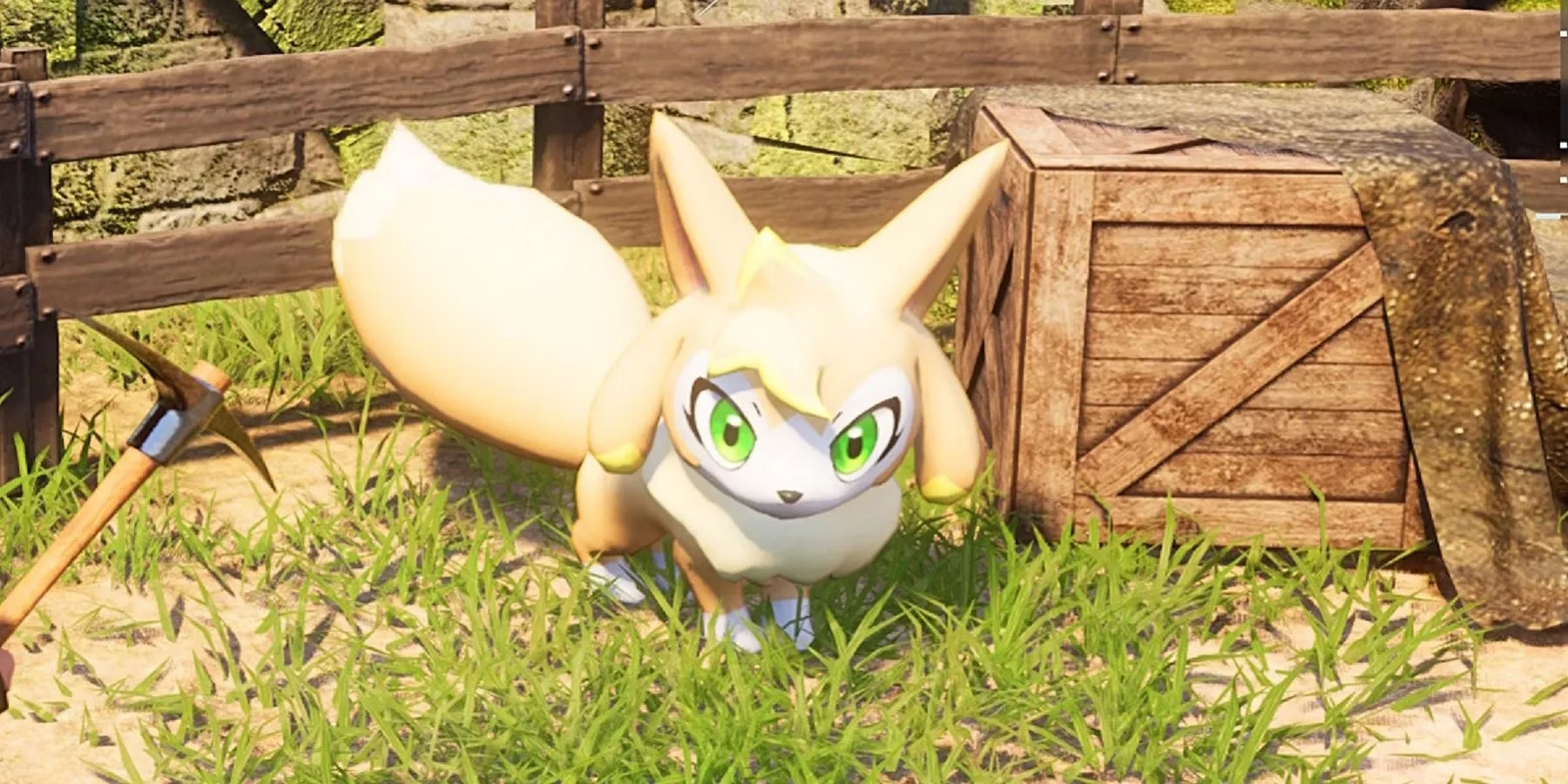
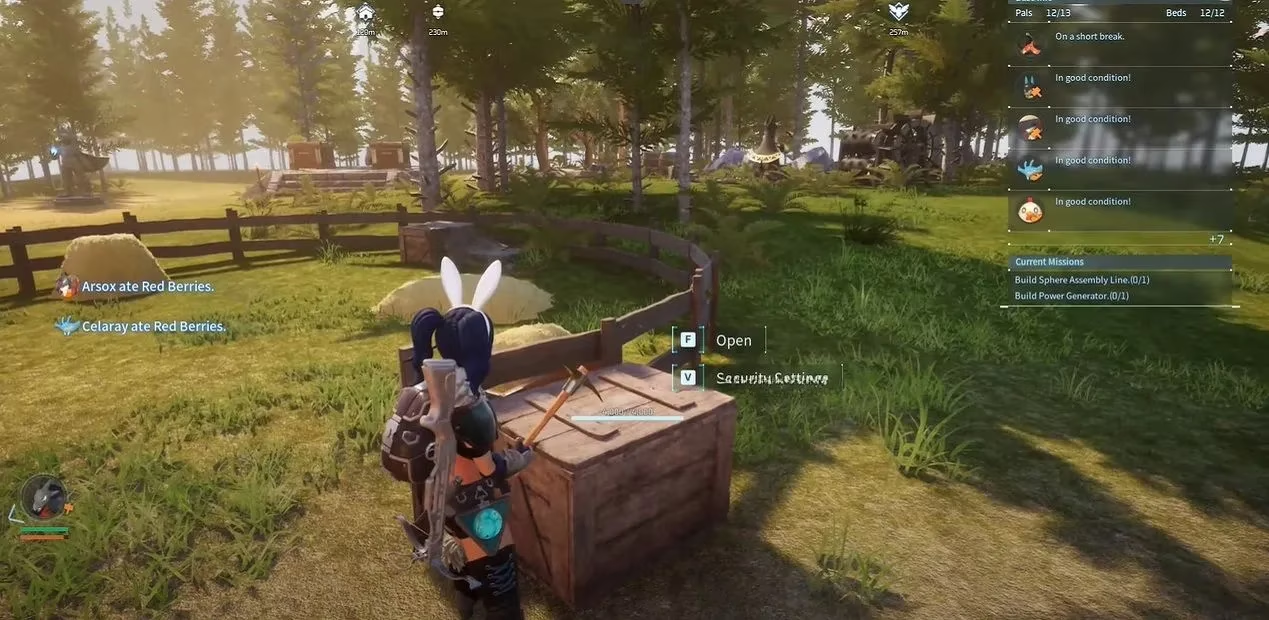
In the early access frenzy of February 2024, a player known as silver-potato-kebab took to the Palworld subreddit with a suggestion so elegantly simple it practically screamed “Why didn’t anyone think of this sooner?” Their idea? Make the Large Storage Container—a robust unit with 40 precious item slots—function as a unified global inventory for all of a player’s bases. Instead of endlessly crafting and placing chests in every camp, the container would share its storage pool across locations, effectively linking far-flung outposts into one cohesive logistical network. At the time, bases were getting more and more impressive—players were building floating towns, industrial mining hubs, and even full-on Pal cities—but the sheer number of storage boxes needed to keep resources organized was, in a word, ridiculous. You’d walk into a base and feel like you’d stumbled into a warehouse after an earthquake: chests stacked on chests, each one a mystery grab bag of ore, wood, and suspicious Pal fluids.
The community latched onto the post like a Foxparks spotting a campfire. Fellow survivors chimed in with enthusiastic support and even more ambitious variations. One popular add-on was the concept of automated supply lines between bases. Under this scheme, a player could assign Pals to transport goods from a mining colony’s container to a crafting base’s storage hub without human intervention. At the time, Pals already dutifully carried harvested resources to designated boxes within a single base, so extending that behavior across the map seemed like a natural next step. As one commenter put it, “I don’t want to play Inventory Management Simulator—I want my Pals to do the heavy lifting.” And honestly, who could blame them? Palworld’s charm lies in the chaotic cooperation between player and Pal, not in manually fast-traveling with pockets full of stone.
Back then, developer Pocketpair was already demonstrating a near-legendary commitment to fan feedback. Just days before silver-potato-kebab’s post gained traction, the studio had rolled out a patch that tackled multiplayer stability, fixed the notoriously derpy Pal pathfinding, and even nerfed the apocalyptic spread of fire. (Remember when a single campfire could torch an entire forest and half your base? Good times.) This responsiveness made players hopeful that a storage overhaul wasn’t just a pipe dream. The fact that Palworld was still in Early Access meant that the developers had the perfect window to experiment—and experiment they did.
The journey from suggestion to implementation wasn’t overnight, but it was surprisingly swift by early access standards. By mid-2025, Pocketpair introduced the “Linked Storage Network” system, a direct descendant of that original Reddit proposal. The Large Storage Container evolved into a true hub: any base with at least one such container could share its contents with any other base on the server or single-player save. The interface was clean, with a dropdown menu allowing players to name containers and filter resources. The collective sigh of relief from the playerbase could probably be measured on a seismograph. Suddenly, building a desert mining outpost or a mountaintop farming retreat no longer meant micro-managing logistics for hours. You could just… play the game.
And that automated supply line? It made the cut too. A new Pal task, “Caravan,” allowed select Pals with high Transporting suitability to form convoys between two designated containers across bases. Watching a line of Eikthyrdeer pulling loaded carts between mountain passes is genuinely one of the most satisfying sights in any survival game, and it turned base building into a true strategic exercise rather than a crate-hauling slog. Let’s be real—nobody misses the days of building a chest maze in every single corner.
The transformation didn’t just streamline gameplay; it supercharged creativity. Freed from the tyranny of disorganized storage, players began constructing interdependent networks of specialized bases. One might be a sprawling ore processing facility, another a verdant plantation dedicated solely to food and medicine, all seamlessly feeding resources through the global grid. Builders on the Palworld Nexus started sharing “mega-base” blueprints that required zero manual inventory management, pushing the game’s construction system to limits no one thought possible in early 2024. The Linked Storage Network became the unsung hero of the most ambitious projects, the invisible glue holding together floating sky-cities and underground bunkers alike.
Of course, even the best features can occasionally cause a bit of chaos—talk about a game-changer when your food base suddenly feeds 500 Lamball steaks into your crafting queue because of a mislabeled container. But that’s Palworld for you: a little absurdity is part of the appeal. Pocketpair’s commitment to iterating on community ideas has only deepened trust in the years since. We’ve seen countless other quality-of-life tweaks—better sorting, stack-to-nearby-chests buttons, and even a “Pal Cleanup Crew” that auto-organizes—but it all started with that one post suggesting the Large Storage Container be something more.
Looking back from 2026, it’s easy to take the seamless base network for granted. New players will never know the horror of opening twenty chests looking for that one stack of high-quality cloth. The evolution of Palworld’s inventory system is a textbook example of how developers and community can dance together in early access to create something greater than either could alone. Silver-potato-kebab might not have expected to become a footnote in Palworld history, but their “simple in concept and execution” idea became a cornerstone of the modern game. And if the past two years have shown us anything, it’s that Pocketpair is still listening—so if you’ve got a wild quality-of-life dream, now might be the perfect time to share it. Who knows? In 2027, your suggestion could be the next big thing.
Leave a Comment
0 Comments