
Conquer the Palpagos Islands: A Guide to Palworld Guilds in 2026
The sun rises over a freshly built wooden fort, smoke curling from the chimney as a Lamball quietly grazes near the forge. This is the daily rhythm of Palworld, a survival crafter that has, by 2026, cemented its legacy far beyond its early 'monster-catching' label. The Palpagos Islands remain a land of stark contrasts—serene beauty and sudden violence—where success is defined by one's ability to build, cook, mine, and fight. Yet, the true evolution of the experience isn't found in a new Pal breed or a cutting-edge firearm. It lies in the raw, chaotic magic of collaboration. A solo adventurer might spend an entire in-game week erecting a stone wall, but a guild gets it done in an afternoon, laughing all the way. It is in this space that the game transforms from a personal grind into a shared epic. Guilds are the beating heart of this world, turning parallel play into genuine cooperation. Figuring out the system is a breeze, honestly—a few clicks and you're in—but the gameplay implications run surprisingly deep.
The Almost Accidental Start: You're Already a Leader
Here is a little secret that often catches newcomers off guard. The moment the loading screen fades and a fresh character awakens on that windswept plateau, the game makes a silent assumption: this player is not just a survivor, but the founder of a nameless collective. It is a subtle, almost philosophical design choice. To verify this, one simply needs to navigate the main menu. There sits the guild tab, quietly active, housing an entity known only as the 'Unnamed Guild.' It doesn't have a banner yet, no shared palbox, but it exists. From this point, a choice presents itself. Leaving the name in digital limbo is perfectly acceptable for the solitary wanderer, but for anyone with even a vague dream of hosting friends, this is the moment of christening. A sharp, memorable name sets the tone. It is more than an identifier; it is a silent promise of the adventures to come.
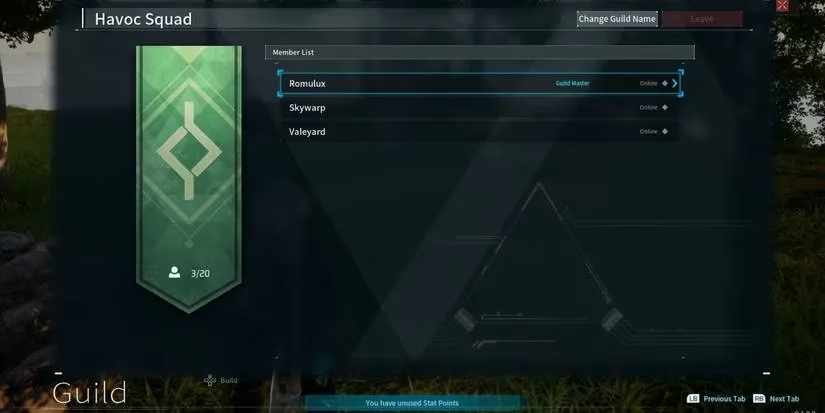
Extending an Invitation: A Lesson in Proximity
The interface strips away all the usual bureaucracy. There are no application forms, no cryptic online portals, and no level requirements blocking the door. The process is purely spatial and remarkably physical. To bring another player into the fold, the founder or an existing member must simply walk up to them in the game world. As the distance closes, the air practically crackles with potential, and a context-sensitive prompt flickers onto the screen. A simple 'Join Guild' command is all it takes. A request shoots over to the target player’s screen, where the guild leadership can tap 'Accept' with the same low friction. It is an elegant tech loop. This design philosophy—'get close and press the button'—keeps the interaction grounded, turning an administrative task into a genuine encounter. It prevents the world from feeling like a lobby and reinforces the sense that forming a party is an in-world event.
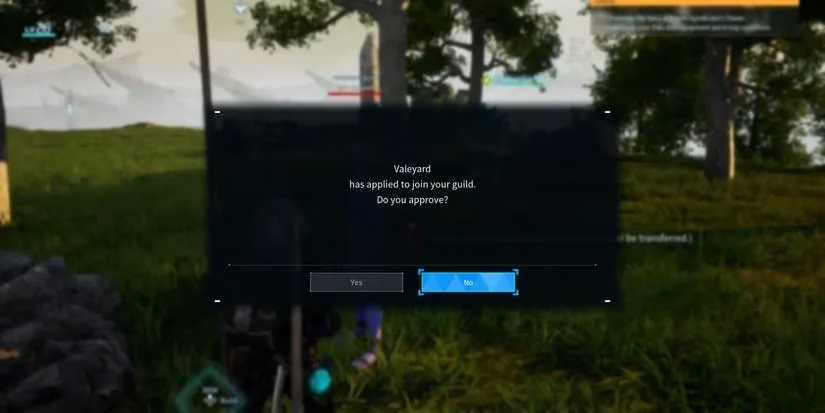
Loyalty is a Single-Track Path
For those drawn to the intrigue of dual loyalties—playing factions against each other or running operations out of multiple mega-bases—the mechanics of Palworld deliver a definitive, non-negotiable answer. The system operates on a strict, singular allegiance. A player can only be tied to one guild at any given time. Trying to game the system or hold a foot in two camps is impossible. It is a design mandate that forces clarity and commitment. If a player wishes to leave their current mates for a different crew, they must sever the first bond entirely before forging the second. It is a bit of a bummer for the diplomats out there, but this restriction actually strengthens the bond within a single unit, ensuring that bases don't become logistical nightmares of competing interests.
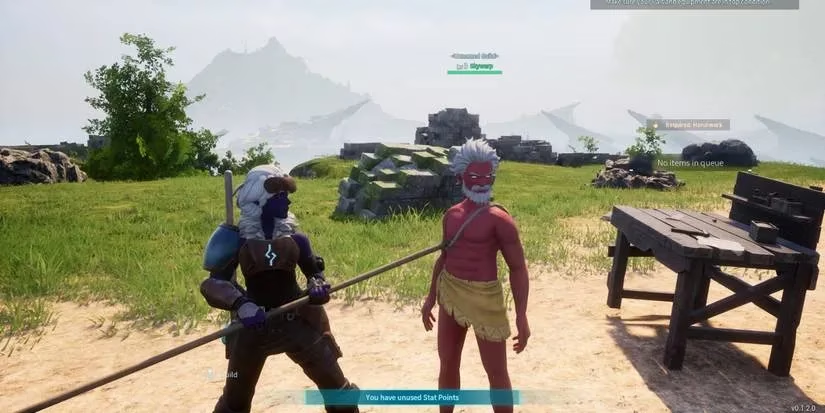
The Spoils of the Collective: Why It Matters
Joining a guild flips the game's economy on its head. The change is immediate and visceral: the base stops being a private instance and becomes a communal nervous system. The benefits stretch across every gameplay pillar, transforming inefficiency into industry.
🛠️ Shared Infrastructure
This is the flagship perk. Guild mates don't just visit a base; they inhabit it. The palbox, storage containers, crafting benches, and production lines become communal property. Players can dump resources into a shared chest while another teammate grabs them to churn out high-tier spheres. A guild doesn't build three separate shacks; it constructs a fortress with designated wings. One member might focus on the aesthetic architecture of a hot-spring resort, while another digs an intricate defensive trench. It turns the base into a living, breathing anthology of styles, all bound by a unified power grid.
🗺️ Persistent World Visibility
Isolation is the currency of single-player survival. In a guild, the map screen is populated with the real-time coordinates of every online member. A player stranded in the volcanic heat of Mount Obsidian becomes a beacon, allowing a long-time friend to swoop in for a rescue on a soaring Jetragon. It eliminates the guesswork and fosters spontaneous meetups, turning the expansive map into a connected playground.
⚔️ Synergistic Combat & Automation
The endgame of Palworld can be brutal. Tower bosses hit like freight trains, and high-level Pals roam with a lethal confidence. Guilds turn these threats into sport. Squads can coordinate an assault, with a frontline tank drawing aggro while sharpshooters and Pals with type advantages dismantle the health bar. Beyond fighting, the Pal workforce itself scales exponentially. Assigning the best Pals to the right chores becomes a group puzzle. A player who lucked out catching an Artisan-work-suitability Anubis can assign it to the public forging line, boosting handiwork speed for the entire squad. It is a synergy loop where the collective firepower and labor pool always outpaces the lone wolf. Honestly, the buff to resource gathering alone makes it a no-brainer.
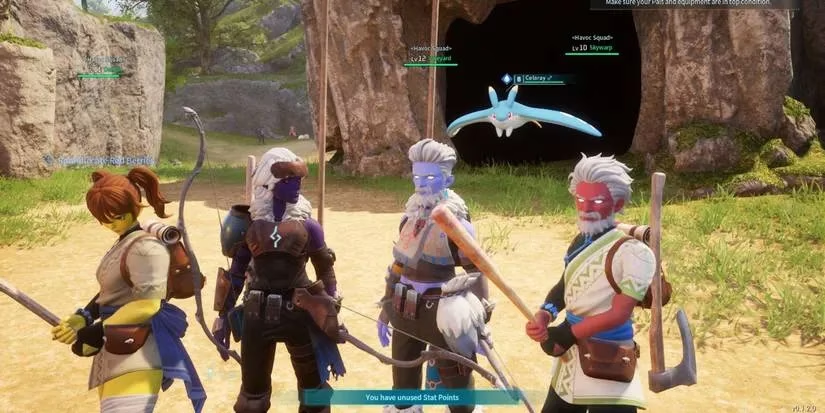
Ultimately, avoiding the guild system in 2026 is like playing with one hand tied behind the back. It doesn't just ease the grind; it rewrites the narrative of survival. The Palpagos are a harsh place, but adversity shared is adversity halved. Whether it is setting up assembly lines for rocket launchers or simply building a cozy lodge with a view, the game’s core mechanic isn't just catching creatures—it is catching the rhythm of a team that, month after month, refuses to let a base fall into ruin.
As players immerse themselves in the dynamic world of Palworld, the thrill of collaboration and resourcefulness becomes the core of the experience. With the intensity of battles and the complexity of crafting within a guild, players may often find themselves in need of additional resources or gear to elevate their gameplay. Whether it's seeking that rare crafting material or upgrading essential equipment, locating the right resources at the right price can significantly impact a player's success.
For gamers looking to enhance their Palworld journey, knowing where to source the best deals on gaming essentials can be a game-changer. Platforms like DealNest offer a comprehensive solution for such needs. By visiting their website, players can find the best deal on a variety of gaming accessories and items, ensuring they are well-equipped to tackle any challenge the Palpagos Islands present. Exploring such resources can be the key to maintaining a competitive edge, allowing players to focus on enjoying the immersive and collaborative aspects of the game.
Leave a Comment
0 Comments